People Management
25 Employee Incentive Ideas to Improve Motivation, Retention, and Performance

Employee incentive ideas are used by managers to improve performance, reduce turnover, and keep teams engaged without constantly increasing labor costs. In hourly workplaces like retail and hospitality, incentives need to be practical and immediate to have any real impact.
Employee incentives can include bonuses, preferred shifts, extra time off, or simple recognition tied to clear outcomes. The most effective incentive ideas for employees are easy to understand and directly connected to the work people are already doing, whether that is covering shifts, hitting sales targets, or maintaining attendance.
These employee rewards ideas and types of employee incentives can be adapted to fit different roles, industries, and teams.
Many teams already offer incentives in some form, but results are inconsistent without a clear structure. This guide brings together employee incentive ideas that work in real workplaces, along with guidance on applying them to support performance over time.
Table of contents
- What are employee incentives?
- Types of employee incentives
- Why you should implement an employee incentive program
- How to start an employee incentive program
- 25 employee incentive ideas to start your own program
- Low-cost employee incentive ideas
- How to choose the right incentives
- Common problems with incentive programs
- Flexible scheduling: A practical employee incentive
- Employee management apps that support incentives and performance
- Employee incentives FAQs
What are employee incentives?
Employee incentives are rewards or benefits offered to encourage specific behaviors at work. These behaviors can include picking up open shifts, meeting performance targets, improving punctuality, or supporting team goals.
In retail, employee incentives might focus on sales performance or upselling. In hospitality, they’re often tied to shift coverage or customer service standards. In healthcare and care services, incentives are commonly linked to attendance, reliability, and continuity of care.
Employee incentives are most effective when employees understand exactly what’s expected and what they will receive in return. Clear criteria, consistent application, and relevance to the role all influence whether an incentive program works.
Most employee incentive programs follow structured patterns, with rewards tied to measurable actions. Without that structure, incentives can feel inconsistent and lose their impact.

Types of employee incentives
Different types of employee incentives work better in different environments. Most businesses use a mix of incentive types to support both short-term performance and longer-term retention.
Monetary incentives
Monetary incentives include bonuses, commission, overtime incentives, and shift changes. These are commonly used in retail, sales, and production roles where output can be measured directly. Financial rewards are straightforward and tend to influence immediate behavior, especially when tied to clear targets.
Non-monetary incentives
Non-monetary incentives include extra time off, preferred shifts, flexible self scheduling, and small perks. In many workplaces, these incentives are highly valued because they affect work-life balance. For shift-based teams, access to better schedules or more predictable hours can influence engagement as much as pay.
Recognition-based incentives
Recognition-based incentives focus on acknowledging consistent performance. This can include employee-of-the-month programs, peer recognition, or manager-led recognition tied to specific actions. These recognition-based ideas are often used in service-based roles where effort and reliability are critical but harder to measure financially.
Workplace incentives
Workplace incentives improve the overall working environment. Examples include team events, improved break areas, or changes to scheduling practices that make shifts easier. In sectors like hospitality and healthcare, these incentives can support retention by making day-to-day work more manageable.
Using a combination of employee incentive types allows businesses to address different motivations across the team. Monetary incentives can support short-term targets, while non-monetary and workplace incentives contribute to longer-term stability.
Why you should implement an employee incentive program
An employee incentive program provides managers with a structured way to influence performance, improve employee motivation, and reduce avoidable turnover.
In many hourly workplaces, performance problems often come from unclear expectations, inconsistent scheduling, or a lack of meaningful reward for doing the job well. Employee incentives help close that gap by linking specific actions to clear outcomes.
When incentive programs are set up properly, they support:
Employee motivation
Clear incentives give employees a reason to go beyond the minimum. This is especially important in roles where day-to-day work can feel repetitive, such as retail shifts, hospitality service, or warehouse operations.
Employee retention
Employees are more likely to stay when effort is consistently recognized. Incentives that reward reliability, attendance, and performance help reduce churn in high-turnover industries.
Productivity and accountability
Tying incentives to measurable outcomes such as sales, shift coverage, or punctuality creates a clearer standard for performance across the team.
Hiring and employer positioning
A well-defined employee incentive program can make roles more attractive to candidates, particularly when incentives include scheduling flexibility or predictable hours alongside pay.
Incentives are most effective when they are tied to real operational needs. For example, rewarding last-minute shift coverage, recognizing consistent attendance, or offering better shifts to high-performing employees.
How to start an employee incentive program
Starting an employee incentive program does not require a large budget, but it does require a clear structure.
Begin by identifying the behaviors that matter most to your business. For some teams, that will be covering open shifts. For others, it might be sales performance, punctuality, or reducing last-minute absences.
Once priorities are clear, define:
- What actions are being rewarded: Be specific. For example, picking up two additional shifts in a week, hitting a weekly sales target, or maintaining perfect attendance over a set period.
- What the reward is: This could be financial, such as a bonus or gift card, or non-monetary, such as preferred shifts or extra time off.
- When the reward is given: Short feedback loops work best. Incentives tied to weekly or monthly performance tend to have more impact than those paid out infrequently.
The budget still matters, but it should follow a structure rather than lead it. Even low-cost employee incentives can be effective when they’re applied consistently and tied to outcomes employees can control.
From there, you can use the employee incentive ideas below as a starting point. Adapt them to fit your team, your industry, and how your business actually operates day to day.
25 employee incentive ideas to start your own program
These ideas for employees and staff work across every shift-based industry. Use them as a starting point and build an employee incentive program that aligns with how your workplace actually operates.
Recognition and appreciation incentives
Recognition-based employee incentives are some of the easiest to implement and often have the fastest impact on employee motivation. These types of employee incentives focus on reinforcing good work, reliability, and team contributions in a visible way, especially in customer-facing environments.
1. Say “thank you” when employees do great work
A simple thank you can be one of the most effective employee incentives when it’s specific and timely. It can be a handwritten note, a small gift card, or a message shared with the team. In a hotel or any retail business, where shifts move quickly, immediate recognition helps reinforce good service and reliability.
Why it works: Immediate recognition reinforces behavior that people are likely to repeat.
2. Honor your best employees publicly
Public recognition turns strong performance into a visible standard across the workplace. It could include employee-of-the-month programs, team shoutouts, or internal announcements. In industries like healthcare and home care, public recognition helps highlight consistency and reliability, not just standout moments.
Why it works: Public recognition builds status and sets a clear performance standard.
3. Create a cumulative or humorous award
A rotating award passed among employees adds continuity to recognition. Each recipient can add something to it, turning it into part of your workplace culture. This works well in office teams and service businesses where ongoing contribution matters more than one-off results.
Why it works: Adds consistency to recognition and builds team culture.
4. Celebrate less obvious accomplishments
Not every contribution shows up in metrics, but it still impacts performance. Recognizing reliability, teamwork, or handling a difficult shift can be just as valuable as hitting a target. In logistics or warehouse teams, this type of employee incentive helps reinforce behaviors that keep operations running smoothly.
Why it works: Encourages behaviors that often go unnoticed but matter operationally.
5. Highlight employees’ outside interests
Sharing employee achievements outside of work helps build stronger connections across the team. This could include sports, volunteering, or creative work. In smaller teams, this type of workplace incentive can improve morale without adding cost.
Why it works: Strengthens connection to the workplace beyond job tasks.
6. Highlight and reward positivity
Create a simple system that allows employees to recognize positive actions from their peers. Collect nominations and regularly reward one or more employees. In customer-facing roles, this helps reinforce the behaviors that shape customer experience.
Why it works: Reinforces team culture and peer-driven recognition.
Work environment and experience incentives
Workplace incentive ideas that improve the day-to-day experience can directly affect performance. These employee incentives focus on tools, environment, and small upgrades that make work easier, more comfortable, and more efficient across shifts.
7. Make sure employees are using the best equipment
Outdated tools slow people down and create frustration during shifts. Upgrading equipment, whether it is POS systems in retail or tools in a warehouse, directly improves performance. As an employee incentive, it shows investment in how people do their jobs every day.
Why it works: Reduces friction and improves day-to-day productivity.
8. Create an unassigned “premium” workspace
Set up a high-quality workspace that employees can earn access to. This could be a quiet office, better seating, or upgraded equipment. In office environments or clinics, this type of incentive creates a visible reward that others can work toward.
Why it works: Visible incentives create ongoing motivation across the team.
9. Create a casual dress day
Relaxing dress codes on certain days gives employees a break from routine expectations. This is easy to implement and works well in office, retail, and service environments where appearance standards are usually fixed. It is a simple workplace incentive that still feels meaningful.
Why it works: Small changes to routine can improve morale with minimal cost.
10. Bring in outside services
Offering services like massages, fitness sessions, or financial advice during work hours makes them accessible. Employees are more likely to use these benefits when they’re available on-site. In high-pressure environments, these can help reduce stress.
Why it works: Makes benefits easy to access without requiring extra effort from employees.
11. Give away coupons and gift cards
Gift cards and vouchers are flexible employee incentive ideas that employees can use outside of work. These can be tied to performance, attendance, or team milestones. In shift-based roles, they’re often preferred because they offer immediate value.
Why it works: Extends value beyond the workplace and feels more personal.
12. Turn rewards into a game
Adding a game element to incentives increases engagement during the workday. This could include raffles, hidden rewards, or simple competitions. In fast-paced workplaces, it creates short breaks that reset energy without disrupting operations.
Why it works: Adds engagement and breaks up routine during the workday.
Flexibility and work-life incentives
Flexible employee incentives are increasingly important for retention, particularly in shift-based roles. These employee incentives focus on time, scheduling, and balance, which are often just as valuable as financial rewards.
13. Give an extra vacation day
Time off remains one of the most valued employee incentives across industries. Offering an additional paid day off outside standard PTO can be tied to performance or attendance. In most shift-based roles, this can significantly impact retention.
Why it works: Time off is consistently one of the most valued employee incentives.
14. Offer flexible scheduling options
Flexible scheduling allows employees to adjust when and how they work. This is especially important in hourly environments where rigid schedules can cause challenges in employees’ lives. Tools like employee scheduling apps can support this by giving employees more control over their shifts.
Why it works: Flexibility improves retention, especially in shift-based roles.
15. Offer family days
Family days give employees the option to step away from work when needed without penalty. This is particularly relevant for teams with school-age children or caregiving responsibilities. In service industries, this type of employee incentive supports long-term loyalty.
Why it works: Reduces stress and supports long-term employee retention.
16. Introduce unexpected time off or reduced hours
Occasionally, closing early or reducing hours as a reward creates a strong positive signal. This works well after busy periods or successful performance. In seasonal or entertainment businesses, especially, it gives teams time to recover after peak demand.
Why it works: Creates positive moments tied directly to business performance.

Autonomy and relief-based incentives
Some of the most effective employee incentive ideas reduce pressure rather than add rewards. These incentives focus on autonomy, workload relief, and giving employees more control over how they work, which can improve both performance and long-term engagement.
17. Let employees drop a project or “fire” a client
High-performing employees often carry the most demanding work. Allowing them to step away from a difficult project or client can be a meaningful reward. In agencies or service businesses, it also helps reduce burnout.
Why it works: Removes pressure and shows trust in employee judgment.
18. Assign temporary support or assistance
Providing help with repetitive or time-consuming tasks can quickly improve productivity. This could be admin support, additional staffing, or task redistribution. In healthcare and logistics, it helps maintain performance during busy periods.
Why it works: Frees up time and reduces frustration in demanding roles.
19. Get on a first-name basis across leadership
Encouraging direct and personal communication between leadership and staff builds trust. When employees feel known, they are more likely to stay engaged. This is particularly important in larger organizations where distance from leadership is common.
Why it works: Builds trust and improves communication across teams.
Culture and team-based incentives
Team-based workplace incentives help build stronger connections between employees. These staff incentive ideas focus on shared experiences, communication, and creating a work environment where people feel part of something, not just scheduled into shifts.
20. Throw team events or celebrations
Regular team events give employees a chance to step away from daily responsibilities. These could include meals, milestone celebrations, or project completions. In most industries, that helps maintain morale during busy seasons.
Why it works: Reinforces team identity and breaks up routine.
21. Host company picnics or off-site events
Off-site events allow employees to interact outside the workplace, strengthening relationships across departments. In office and corporate teams, it supports collaboration and communication.
Why it works: Builds stronger relationships in a more relaxed setting.
22. Shake up the hierarchy
Having leadership serve or support employees during events creates a different dynamic. It shows respect in a visible way. In structured environments, this can shift how leadership is perceived.
Why it works: Demonstrates respect and reduces perceived hierarchy.
23. Encourage employees to share about themselves
Creating space for employees to talk about interests or experiences builds familiarity. This can be done during meetings or team sessions. In smaller teams, it positively improves communication and cohesion.
Why it works: Improves team cohesion and communication.

Purpose and community incentives
Purpose-driven employee incentives connect work to something beyond daily tasks. These types of employee incentives can be especially effective for engagement and retention, particularly in organizations where values and community involvement matter to the team.
24. Encourage community service
Offering paid time for volunteering allows employees to contribute outside of work. They can also be organized as team activities. In purpose-driven organizations, this aligns work with personal values.
Why it works: Connects work to a broader sense of purpose.
25. Create unexpected “holidays” or time-off moments
Introducing non-traditional days off creates a memorable incentive. That could include closing for a local event or rewarding teams after a busy period. In shift-based workplaces, this stands out more than standard benefits.
Why it works: Creates memorable incentives that employees remember.
Bonus: Ask employees what they actually want
Some of the best employee incentive ideas come directly from employees. Ask what would make their work easier or more rewarding, then rotate incentives based on that feedback. This approach works across all industries because it reflects real needs rather than assumptions.
Why it works: Removes guesswork and increases engagement with incentive programs.
Low-cost employee incentive ideas
Not every employee incentive program needs a large budget. Many of the most effective employee incentives are low-cost or non-monetary incentives, improving daily work rather than adding expense.
Several of the ideas above can be implemented with little to no cost. Flexible scheduling, public recognition, casual dress days, and giving employees more control over their time are all examples of cheap employee incentive ideas that still have a measurable impact.
Low-cost employee incentives work best when they make employees’ lives easier. That might mean making schedules easier to manage, improving team messaging, or giving employees more predictability in their workweek. In shift-based environments, these changes matter more than one-time financial rewards.
When budgets are limited, focus on consistency. A simple, regularly applied incentive will have more impact than a larger reward used once and forgotten.
How to choose the right incentives
The best employee incentive ideas are tied to how your team actually works. Choosing the right approach starts with understanding what affects employee motivation daily.
Look at where problems show up in your operation. That could include missed shifts, last-minute callouts, low engagement, or uneven performance across the team. These are signals that your current employee rewards ideas are either unclear or not aligned with what employees value.
Two factors tend to shape effective incentives:
Pain points
What slows employees down or creates frustration during shifts? These might include unpredictable schedules, heavy workloads, or a lack of recognition. Incentives that reduce these issues are more likely to influence behavior.
Expectations
What do employees assume comes with the job? This includes pay, scheduling, communication, and management support. When incentives go beyond these expectations, even in small ways, they have a stronger impact.
The goal is not to offer more incentives, but to offer the right ones. When employee incentives align with real working conditions, they support both performance and retention.
Common problems with incentive programs
Many employee incentive programs fail to deliver results, even when the ideas themselves are strong. The issue is usually not the incentive itself, but how it’s applied.
Common employee motivation problems often come from:
- Incentives that are unclear or inconsistently applied
- Rewards that do not match the effort required
- Programs that favor certain roles or shifts over others
- Delayed rewards that disconnect action from outcome
- Incentives that ignore scheduling or workload issues
In shift-based workplaces, issues with incentive programs often show up around coverage and time management. Employees may be expected to perform at a high level, but without the structure or flexibility to support it.
When these problems are not addressed, incentives lose credibility. Employees stop engaging with the program because the connection between effort and reward isn’t clear.
Fixing these issues usually requires looking beyond the reward itself and focusing on how work is scheduled, tracked, and managed.
Flexible scheduling: A practical employee incentive
Flexible scheduling is one of the most effective employee incentives in shift-based workplaces, where employees often value control over their time as much as financial rewards.
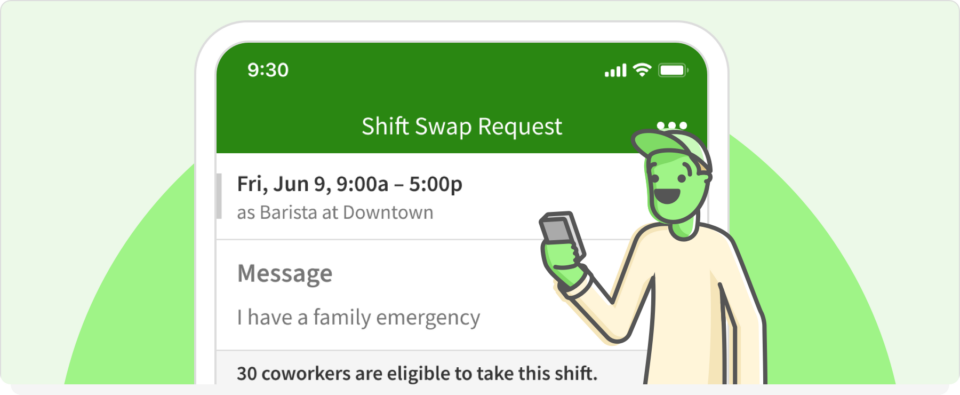
A flexible work schedule allows employees to choose shifts that fit their availability, swap shifts when needed, and plan their time outside of work with more certainty. These work-life balance incentives reduce stress and make it easier for employees to stay consistent with attendance and performance.
For managers, flexible scheduling also improves coverage. When employees have visibility into open shifts and can take action themselves, it reduces last-minute gaps and the need for manual coordination.
In many teams, access to flexible scheduling is introduced through an employee scheduling app like When I Work, making it easier to manage at scale. Schedules can be published quickly, employees can claim open shifts, and changes can happen without disrupting the entire team.
Flexible scheduling serves as an incentive because it aligns with how employees experience work every day. It is not a one-time reward, but part of how the workplace operates.
Employee management apps that support incentives and performance
Employee incentives are more effective when the right systems support them. Without clear schedules, accurate time tracking, and consistent communication, even the best employee incentive ideas become difficult to manage.
A workforce management software like When I Work helps connect incentives to daily operations. Instead of manually tracking performance and rewards, managers can view schedules, hours, and availability in one place.
With When I Work, employees get:
- 24/7 access to their schedule
- The ability to swap or pick up shifts with ease
- A clear way to submit availability and time-off requests
- More control over their work-life balance
For managers, it creates a more stable and predictable environment. Scheduling becomes faster, communication improves, and common issues like missed shifts or overtime creep are easier to manage.
Employee incentives work best when they’re consistent and visible. When scheduling, communication, and time tracking are handled in a single system, it becomes easier to apply incentives that employees understand and respond to.
Start your free 14-day trial of When I Work and see how flexible scheduling can support your team.
Employee incentives FAQs
Employee incentives often raise practical questions around how they work, what employees expect, and how to apply them consistently. These FAQs cover common questions about employee incentives, employee motivation, and how to structure incentive programs in real workplaces.
What are employee incentives, and why are they crucial in today’s workplace?
Employee incentives are rewards, benefits, or recognition used to encourage specific behaviors at work, such as strong performance, reliability, or teamwork. These incentives can include financial rewards, flexible scheduling, time off, or workplace recognition.
In the 2026 workplace, employee incentives play a key role in employee motivation and retention. In industries where turnover can be high, well-structured employee incentives help keep employees engaged, improve consistency across shifts, and make roles more attractive to both current staff and new hires.
Can employee incentives be offered without a significant financial investment?
Many effective employee incentives do not require a large budget. Low-cost employee incentives such as public recognition, flexible scheduling, preferred shifts, or additional time off can have a strong impact when applied consistently.
In many workplaces, non-monetary incentives are just as effective as financial rewards because they improve the day-to-day work experience. The most important factor is relevance. When incentives align with what employees actually value, even simple, low-cost ideas can improve employee motivation and retention.
How can employee incentives impact productivity and turnover rates?
Employee incentives influence productivity by giving employees a clear reason to meet targets, cover shifts, and maintain consistent performance. When incentives are tied to specific outcomes such as attendance, sales, or reliability, they help set expectations across the team.
Employee incentives also play a direct role in employee retention. When employees feel their effort is recognized and rewarded consistently, they are more likely to stay. In high-turnover industries such as retail or restaurants, well-structured employee incentives can reduce churn and improve stability across shifts.
Are there any modern tools or platforms that can serve as employee incentives?
Yes, certain tools can function as employee incentives when they improve how work is scheduled and managed. An employee scheduling app or workforce management software can support flexible scheduling, shift swaps, and better visibility into hours, all of which contribute to work-life balance.
In many shift-based workplaces, access to flexible scheduling is among the most valued employee incentives. When employees have more control over their time and can easily manage their schedules, it supports both employee motivation and retention without requiring additional financial rewards.
How can I tailor employee incentives to best fit my organization’s needs and culture?
Start by identifying what drives employee motivation in your workplace. Look at where issues show up, such as missed shifts, low engagement, or inconsistent performance, and use those signals to shape your employee incentive ideas.
Focus on two areas: pain points and expectations. If employees struggle with scheduling, flexibility can be a strong incentive. If effort goes unnoticed, recognition-based employee rewards ideas may be more effective. The most successful employee incentives are aligned with how your team actually works, not just what sounds good in theory.